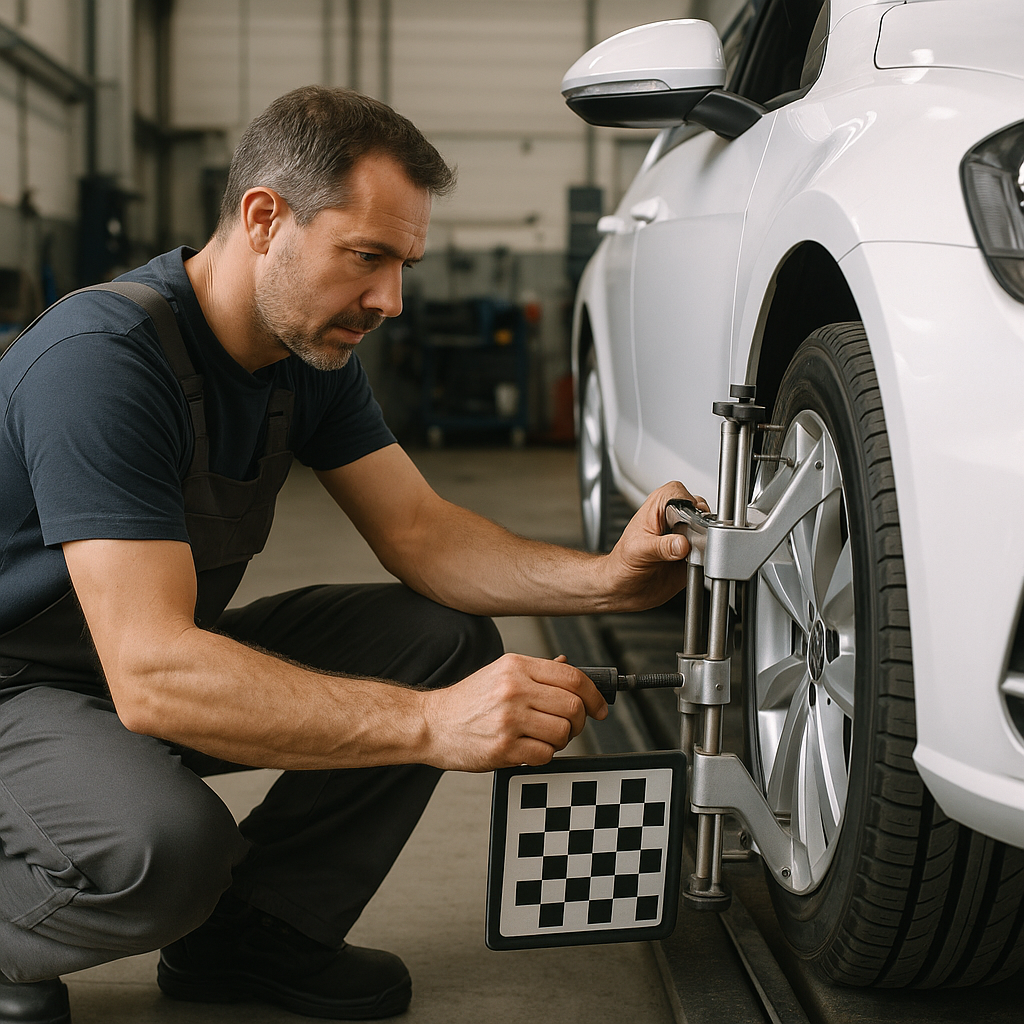
Why Wheel Alignment Matters
Wheel alignment is a fundamental aspect of vehicle maintenance that significantly influences both handling and tyre longevity. When your wheels are aligned correctly, your vehicle will handle better, offer a smoother ride, and maximise the lifespan of your tyres. Neglecting this important service can lead to uneven tyre wear, compromised safety, and costly repairs.
Understanding Wheel Alignment
Wheel alignment refers to the adjustment of the angles of the wheels so that they are set to the car manufacturer's specifications. The key angles involved in wheel alignment include:
- Camber: The tilt of the wheel when viewed from the front. A negative camber means the top of the wheel is tilted inwards, while a positive camber tilts it outwards.
- Toe: The angle of the wheels in relation to the centreline of the vehicle. 'Toe-in' means the front of the wheels is closer together than the back, while 'toe-out' is the opposite.
- Castor: The angle of the steering pivot when viewed from the side. Proper castor affects steering stability.
The Impact on Handling
Proper wheel alignment is essential for optimal handling. When your wheels are misaligned, you may experience:
- Pulling to one side: If your vehicle drifts to the left or right, it indicates a potential alignment issue.
- Uneven steering response: If the steering feels loose or overly sensitive, it may be due to misalignment.
- Vibration in the steering wheel: This can also signal alignment problems, affecting your overall driving comfort.
These handling issues can become particularly pronounced during adverse weather conditions, such as rain or snow, increasing the risk of accidents. Regular checks are essential, especially as we transition between seasons in the UK.
Tyre Wear and Longevity
Incorrect wheel alignment can lead to uneven tyre wear, which not only shortens the lifespan of your tyres but can also affect fuel efficiency and safety. Common types of tyre wear associated with misalignment include:
- Camber wear: If your camber is off, the inside or outside edges of the tyres may wear out faster.
- Toe wear: Misalignment in the toe angle can cause the front or rear edges of the tyres to wear unevenly.
- Flat spots: If your wheels are not aligned properly, you may experience flat spots on your tyres, leading to a bumpy ride.
In the UK, where road conditions can vary significantly, maintaining proper wheel alignment is crucial to ensure your tyres perform optimally and last longer. The average cost of replacing a set of tyres can range from £200 to £600, depending on the brand and type. Proper alignment can save you money in the long run by prolonging tyre life.
Practical Checks You Can Do This Week
Here are some simple checks you can perform to assess your wheel alignment:
- Check your tyre pressure: Make sure all tyres are inflated to the recommended levels as per your owner's handbook.
- Inspect your tyres for uneven wear: Look for signs of wear on the edges or centre of the tyres.
- Pay attention to your steering: Note if your vehicle pulls to one side or if your steering feels off.
If you notice any of these symptoms, it may be time to consider a professional wheel alignment service.
When to Book a Mechanic
It's advisable to book a mechanic if you experience:
- Persistent pulling to one side while driving.
- Uneven tyre wear patterns.
- Vibrations in the steering wheel, especially at higher speeds.
In the UK, many garages offer wheel alignment services for around £50 to £100, depending on the vehicle type and location. Regular alignment checks are recommended every 6,000 to 8,000 miles or when you replace your tyres, as per DVSA guidelines. Keeping your vehicle aligned not only improves safety but can also enhance your driving experience.
Conclusion
In summary, wheel alignment plays a critical role in both vehicle handling and tyre longevity. By understanding the importance of proper alignment and taking proactive steps to maintain it, you can ensure a safer, more comfortable driving experience while saving money on tyre replacements. Regular checks and timely interventions are key to keeping your vehicle roadworthy and efficient.
UK ownership context
If this issue affects visibility, braking, tyres, emissions or warning lights, treat it as a roadworthiness item and sort it before an MOT or any longer journey.
For many drivers, the most useful benchmark is not a generic internet interval but the manufacturer schedule, recent MOT advisories and the pattern of local driving the vehicle sees each week.
Useful next steps with Motoryst
Use the tools below to turn this advice into a practical next step.
- Check compliance and road-use related details
- Store and organise your service history
- Run a vehicle history check before buying
- Compare warranty cover options
Useful UK references
- DVSA and GOV.UK guidance on MOT preparation
- Check previous MOT advisories and failures
- Use the vehicle owner's handbook and manufacturer service schedule for model-specific intervals, fluids and warning-light guidance.