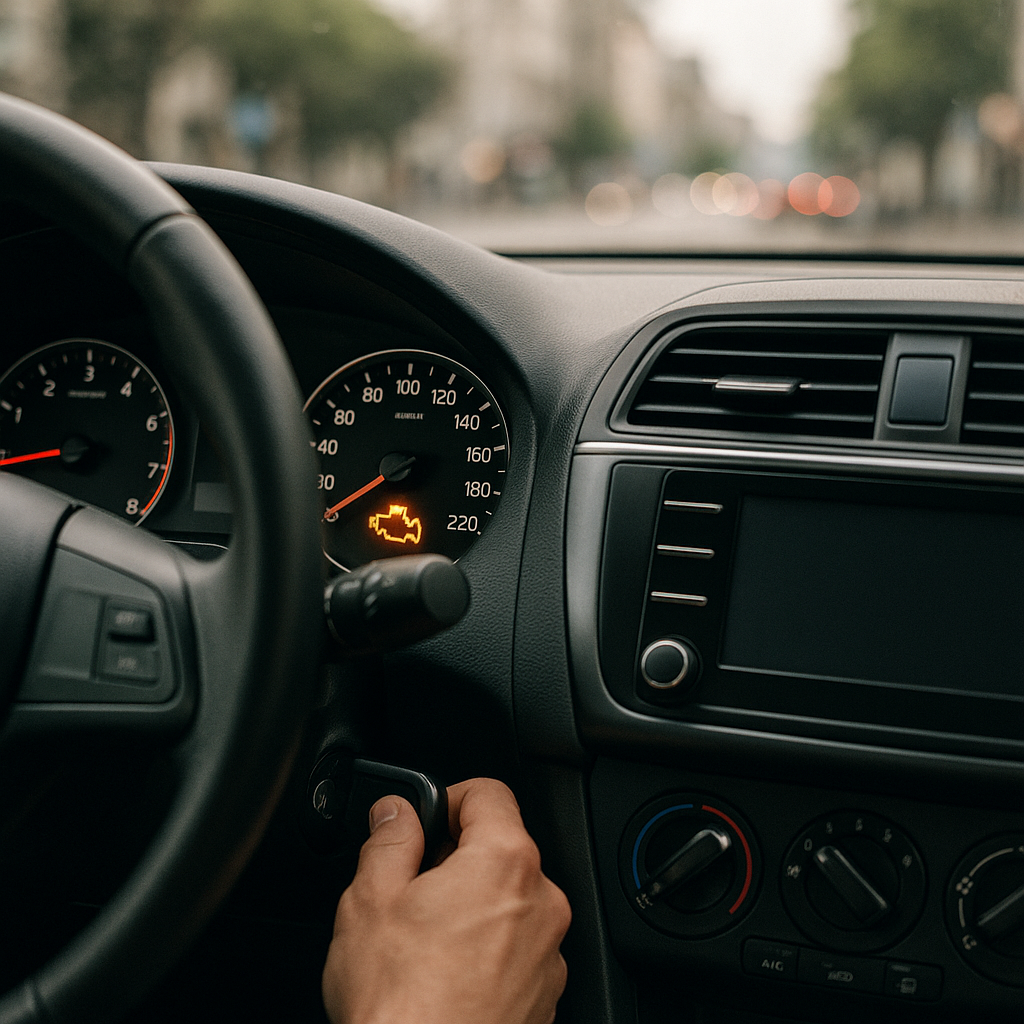
Immediate Steps to Take
Seeing the check engine light illuminate on your dashboard can be alarming. However, it’s essential to remain calm and take systematic steps to understand the issue. The check engine light can signal a variety of problems, some minor and others more serious. Here’s what you should do:
- Check for any obvious issues, such as loose or damaged fuel caps.
- Pay attention to the car’s performance; note any unusual sounds or behaviours.
- Refer to your vehicle’s owner handbook for specific guidance related to your model.
Common Causes of the Check Engine Light
The check engine light can be triggered by numerous factors. Understanding these can help in diagnosing the issue:
- Faulty Oxygen Sensor: A common issue that can affect fuel efficiency and emissions.
- Loose or Damaged Fuel Cap: This can lead to fuel vapour leaks and trigger the light.
- Malfunctioning Catalytic Converter: A critical component for emissions control that can be costly to replace.
- Ignition System Issues: Problems with spark plugs or ignition coils can cause performance issues.
Assessing the Situation
Before panicking, assess the situation. If your vehicle is running smoothly without any strange noises or performance issues, it may be safe to drive a short distance to a garage. However, if you notice any of the following symptoms, you should pull over and turn off the engine:
- Significant loss of power.
- Strange noises, such as knocking or hissing.
- Unusual smells, such as burning or fuel odours.
UK Context: Roadworthiness and MOT Considerations
In the UK, maintaining roadworthiness is crucial, especially as it relates to the annual MOT test. A lit check engine light can lead to an automatic failure during the MOT. Regular check-ups and adherence to service intervals can prevent issues from arising unexpectedly.
What to Do Next
If the check engine light stays on after the initial checks, it’s advisable to perform a diagnostic scan. Many local garages and auto parts retailers offer free diagnostic checks, which can pinpoint the issue. Here’s a simple checklist:
- Visit a local garage or use an OBD-II scanner if you have access to one.
- Take note of any error codes that appear.
- Record the symptoms you’ve observed.
When to Book a Mechanic
While some issues can be resolved at home, it's vital to know when to seek professional help. Consider booking a mechanic if:
- The check engine light is flashing instead of staying steady, indicating a more severe problem.
- You experience a loss of power or performance.
- There are noticeable changes in fuel efficiency.
Typical costs for diagnostics can range from £30 to £100, depending on the garage and the complexity of the issue. Repairs can vary widely based on the identified problem, from minor fixes like replacing a fuel cap to more significant repairs like catalytic converter replacement, which can cost upwards of £1,000.
Preventive Measures and Regular Maintenance
To minimise the chances of the check engine light coming on, regular maintenance is key. Here are some preventive measures:
- Follow the manufacturer’s service schedule as outlined in your owner’s handbook.
- Regularly check and replace spark plugs and oxygen sensors as needed.
- Ensure that your fuel cap is always secured properly.
Conclusion
In conclusion, while the check engine light can be a source of anxiety for drivers, understanding how to respond can mitigate potential issues. By staying informed and proactive with your vehicle maintenance, you can keep your car running smoothly and avoid costly repairs down the line. If in doubt, always consult a professional mechanic to ensure your vehicle remains roadworthy.
UK ownership context
Use your owner's handbook and service schedule as the starting point, then adapt the timing to UK stop-start traffic, colder months and the mileage your car actually covers.
For many drivers, the most useful benchmark is not a generic internet interval but the manufacturer schedule, recent MOT advisories and the pattern of local driving the vehicle sees each week.
Useful next steps with Motoryst
Use the tools below to turn this advice into a practical next step.
- Store and organise your service history
- Run a vehicle history check before buying
- Compare warranty cover options
- Estimate current vehicle value
Useful UK references
- DVSA and GOV.UK guidance on MOT preparation
- Check previous MOT advisories and failures
- Use the vehicle owner's handbook and manufacturer service schedule for model-specific intervals, fluids and warning-light guidance.