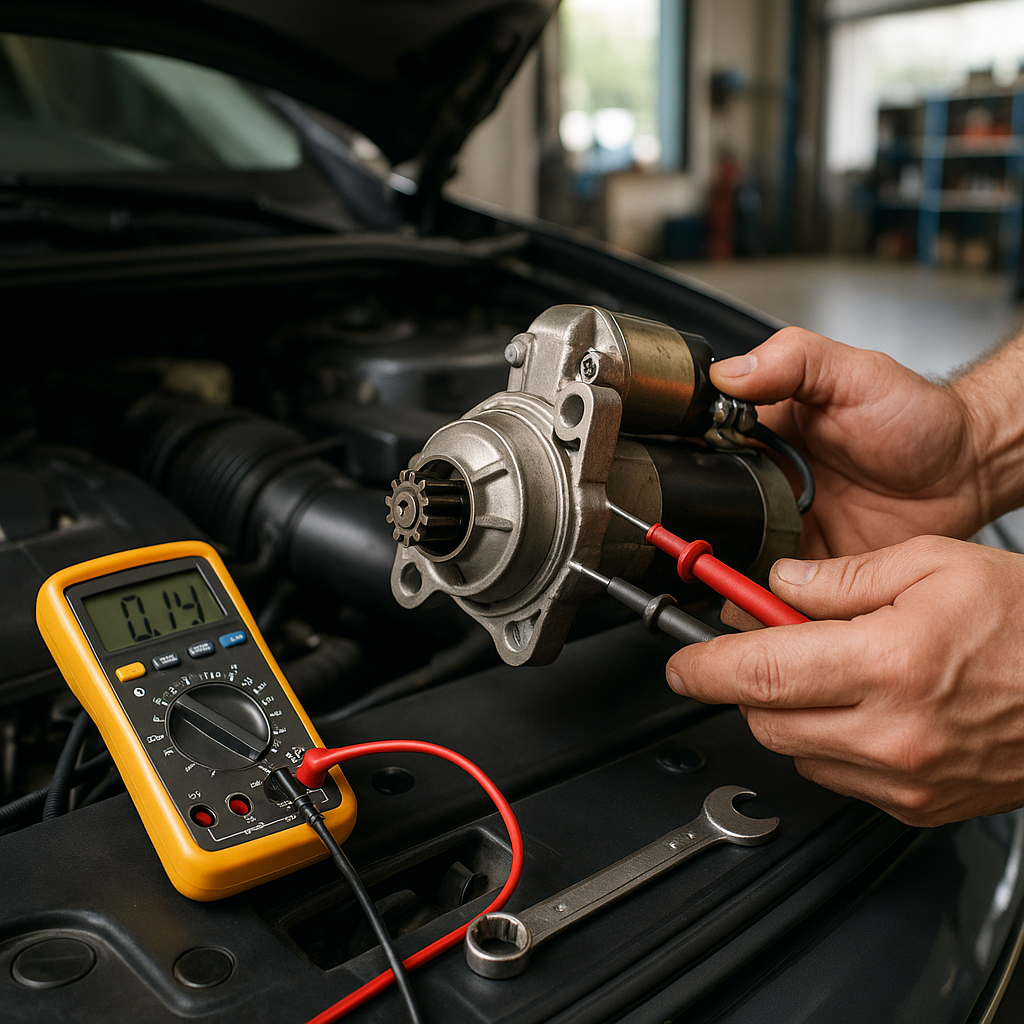
Understanding the Starter Motor
The starter motor is a crucial component of your vehicle's starting system. It is responsible for turning over the engine when you turn the ignition key. If your car fails to start, the starter motor may be the culprit. Diagnosing starter motor problems can save you time and money by identifying issues before they escalate.
Signs of a Faulty Starter Motor
Before diving into diagnostics, it's essential to recognise the common signs that indicate a starter motor problem. These signs can include:
- The engine does not crank when the key is turned.
- You hear a clicking sound when attempting to start the engine.
- The dashboard lights dim or flicker when you turn the key.
- The engine cranks slowly or labours before starting.
- There is no sound at all when you turn the ignition.
Initial Checks Before Diagnosis
Before you begin diagnosing the starter motor, perform some initial checks to rule out other potential issues. Ensure that:
- The battery is fully charged and in good condition.
- All electrical connections are secure and free from corrosion.
- The ignition switch is functioning correctly.
If these initial checks do not reveal the problem, you can proceed with diagnosing the starter motor itself.
Testing the Starter Motor
To test the starter motor, you will need a multimeter, a wrench, and possibly a helper. Follow these steps:
1. Check the Battery Voltage
Start by checking the battery voltage. A healthy battery should read around 12.6 volts. If the voltage is below 12 volts, charge the battery and retest it.
2. Inspect Battery Connections
Ensure that the battery terminals are clean and tight. Corroded or loose connections can prevent sufficient power from reaching the starter motor. Clean any corrosion with a wire brush and reconnect securely.
3. Test the Starter Relay
The starter relay is an important component that sends power to the starter motor. Use the multimeter to check for continuity when the ignition is turned on. If the relay is faulty, it will need to be replaced.
4. Locate the Starter Motor
Next, locate the starter motor in your vehicle. It is usually found near the bottom of the engine, on the transmission side. Consult your vehicle's manual for specific location details.
5. Perform a Voltage Drop Test
To check the starter motor's performance, perform a voltage drop test:
- Connect the multimeter's positive lead to the battery positive terminal and the negative lead to the starter motor's positive terminal.
- Have a helper turn the ignition key to the start position.
- Observe the voltage reading. A reading above 0.5 volts indicates a bad connection or fault in the starter motor.
6. Bench Test the Starter Motor
If the voltage drop test indicates a problem, you can bench test the starter motor. Remove it from the vehicle, and connect it directly to a fully charged battery. If it does not spin, the starter motor is likely faulty and should be replaced.
Common Starter Motor Issues
Here are some common starter motor problems you may encounter:
- Worn Brushes: The brushes inside the starter motor can wear out over time, leading to poor performance.
- Faulty Solenoid: The solenoid is responsible for engaging the starter motor. If it fails, the motor will not operate.
- Bad Bearings: Worn bearings can cause the starter motor to seize or operate erratically.
- Electrical Issues: Corroded connections or damaged wiring can prevent the starter motor from receiving power.
When to Seek Professional Help
If you have performed these tests and still cannot identify the issue, it may be time to consult a professional mechanic. They have the tools and expertise to diagnose complex electrical problems that may be affecting your starter motor.
Preventative Maintenance
To prolong the life of your starter motor and reduce the likelihood of issues, consider the following preventative maintenance tips:
- Regularly check and clean battery terminals.
- Ensure your battery is in good condition and replace it every 3-5 years.
- Have your vehicle's electrical system checked periodically.
- Address any starting issues immediately to prevent further damage.
Conclusion
Diagnosing common starter motor problems can seem daunting, but with the right tools and knowledge, you can identify issues effectively. Remember to perform initial checks, test the starter motor, and seek professional help when necessary. By staying proactive with maintenance, you can keep your starter motor in optimal condition and ensure your vehicle starts reliably.