How To Prevent Overheating In Stop-start Traffic
Driving in stop-start traffic can be a frustrating experience, but it can also put your vehicle at risk of overheating. This is particularly important for UK drivers, especially during the warmer months when temperatures can rise significantly. Overheating can lead to severe engine damage, costly repairs, and even safety hazards on the road.
In the UK, regular vehicle maintenance is crucial not only for performance but also for compliance with the MOT standards. An overheating engine can lead to a failed MOT, impacting your vehicle's roadworthiness. This guide will provide practical steps that you can take to prevent overheating while navigating congested traffic.
Check Your Coolant Levels Regularly
The engine coolant plays a vital role in regulating your engine's temperature. Low coolant levels can lead to overheating, especially in stop-start situations. Here’s how you can check your coolant:
- Ensure your engine is cool before checking.
- Locate the coolant reservoir, usually a translucent plastic tank near the radiator.
- Check the level against the markings on the side of the reservoir.
If the coolant is low, top it up with a mixture of coolant and water as specified in your owner’s handbook. Regular checks can help prevent overheating, especially during the summer months.
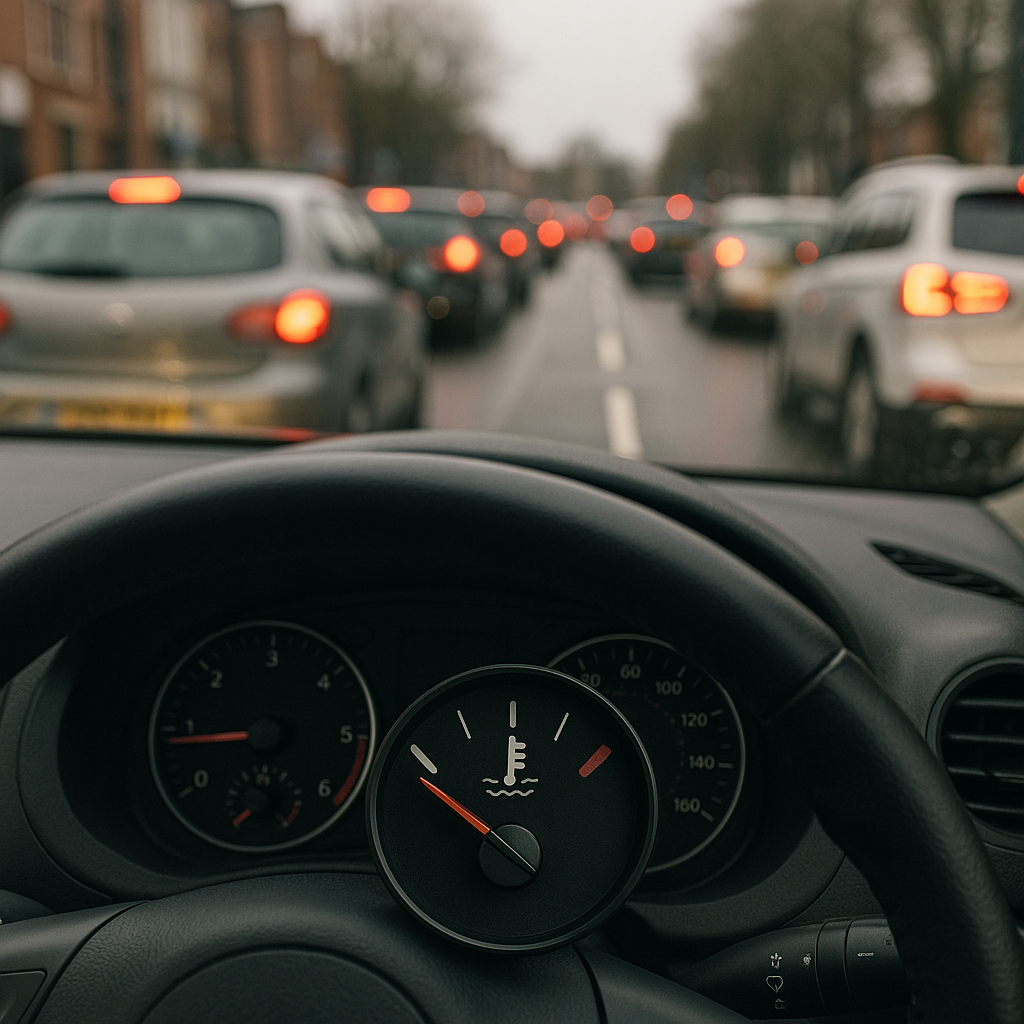
Monitor Your Temperature Gauge
Most modern vehicles come equipped with a temperature gauge on the dashboard. Keeping an eye on this gauge can provide early warnings of potential overheating:
- Normal operating temperature is typically between 90°C and 105°C.
- If the gauge approaches the red zone, take immediate action.
In stop-start traffic, if you notice the temperature rising, turn off your air conditioning and open the windows to help cool the cabin. If the temperature continues to rise, pull over safely and turn off the engine.
Maintain Your Cooling System
Regular maintenance of your vehicle’s cooling system is essential. This includes:
- Flushing the cooling system every two years or as recommended in your service manual.
- Replacing old or worn hoses that can lead to leaks.
- Checking the radiator for blockages or damage.
Routine checks can help you identify potential issues before they escalate into costly repairs. If you’re unsure about how to perform these checks, consult a professional mechanic.
Use Your Air Conditioning Wisely
While air conditioning can make your journey more comfortable, it can also put additional strain on your engine, especially in stop-start traffic. Here are some tips:
- Use air conditioning sparingly in heavy traffic.
- Consider using the vehicle’s ventilation system instead to keep cool.
When you do use air conditioning, ensure that your vehicle is well-maintained, as a faulty AC system can contribute to engine overheating.
What to Do If Your Engine Overheats
If you find yourself in a situation where your engine is overheating, follow these steps:
- Pull over to a safe location as soon as possible.
- Turn off the engine and allow it to cool down.
- Check the coolant level once it’s safe to do so.
Never attempt to remove the radiator cap while the engine is hot, as this can cause serious burns. If you’re unable to resolve the issue, it’s best to call for roadside assistance.
When to Book a Mechanic
It’s important to be proactive about your vehicle’s health. If you notice any of the following symptoms, it’s time to book an appointment with a mechanic:
- Persistent overheating despite regular coolant checks.
- Unusual noises from the engine.
- Coolant leaks under the vehicle.
Costs for repairs can vary widely based on the issue. Minor repairs, like replacing a thermostat, can cost between £100 and £200, while more extensive repairs, such as a head gasket replacement, can run upwards of £1,000. Always consult your owner's handbook for service intervals and recommendations.
Conclusion
Preventing overheating in stop-start traffic requires vigilance and regular maintenance. By checking your coolant levels, monitoring your temperature gauge, and maintaining your cooling system, you can enjoy a safe and comfortable driving experience. Remember, taking these proactive measures not only protects your vehicle but also ensures you remain compliant with UK regulations regarding roadworthiness.
UK ownership context
Use your owner's handbook and service schedule as the starting point, then adapt the timing to UK stop-start traffic, colder months and the mileage your car actually covers.
For many drivers, the most useful benchmark is not a generic internet interval but the manufacturer schedule, recent MOT advisories and the pattern of local driving the vehicle sees each week.
Useful next steps with Motoryst
Use the tools below to turn this advice into a practical next step.
- Store and organise your service history
- Run a vehicle history check before buying
- Compare warranty cover options
- Estimate current vehicle value
Useful UK references
- DVSA and GOV.UK guidance on MOT preparation
- Check previous MOT advisories and failures
- Use the vehicle owner's handbook and manufacturer service schedule for model-specific intervals, fluids and warning-light guidance.