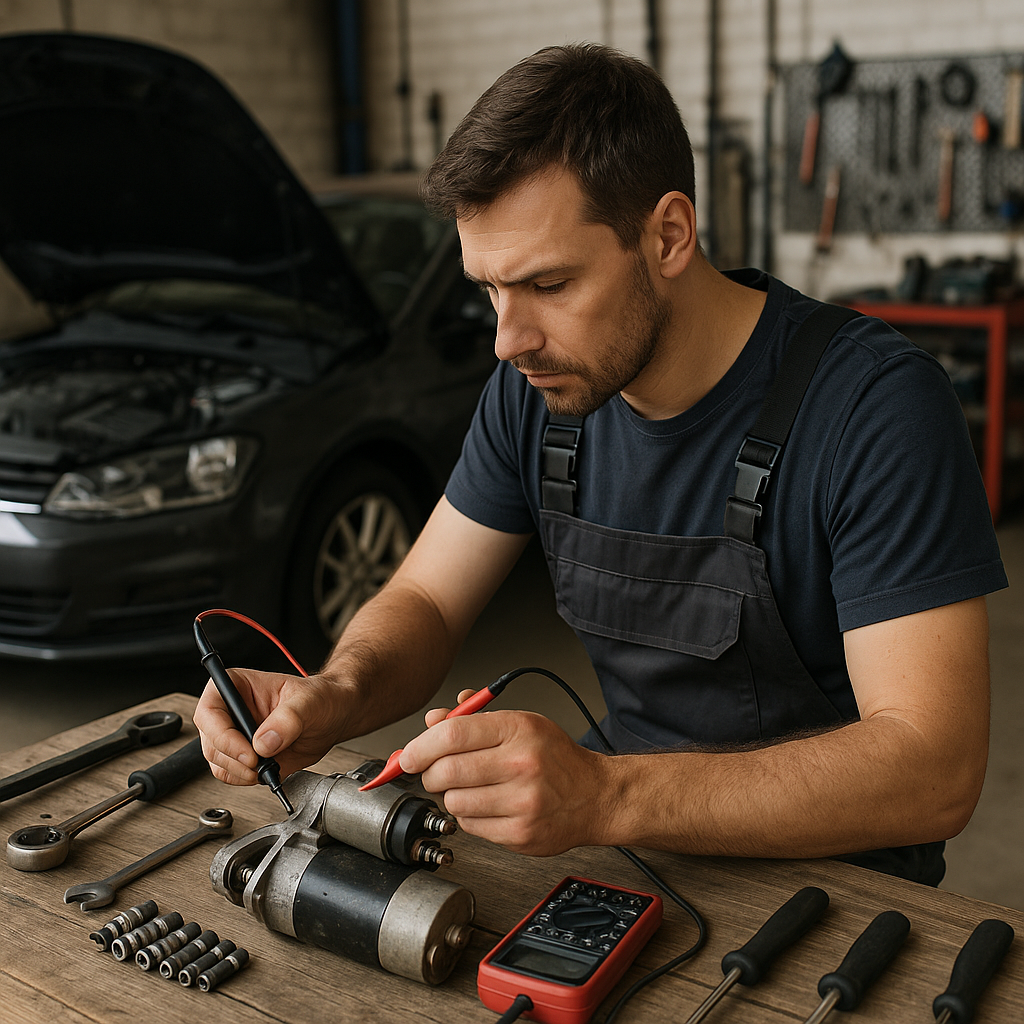
How To Diagnose Common Starter Motor Problems
The starter motor is a crucial component of your vehicle’s ignition system. It is responsible for turning over the engine, allowing it to start. If you’re facing issues with starting your car, it’s essential to diagnose the problem accurately. In the UK, where vehicles must pass an MOT and maintain roadworthiness, addressing starter motor issues promptly can save you from costly repairs and ensure compliance with safety standards.
Common starter motor problems can manifest in various ways, and knowing how to identify these issues can help you take action before they escalate. This guide will walk you through the symptoms, checks, and when to seek professional help.
Symptoms of Starter Motor Problems
Recognising the signs of a failing starter motor can help you act quickly. Here are some common symptoms you might encounter:
- The engine doesn’t crank or makes a clicking sound when turning the key.
- The dashboard lights dim significantly when attempting to start the engine.
- You hear a grinding noise when trying to start the vehicle.
- The starter motor engages intermittently, leading to unpredictable starting.
Initial Checks to Perform
Before diving deeper into diagnostics, there are several straightforward checks you can perform. These steps can often pinpoint the issue without needing advanced tools:
- Check the Battery: A weak or dead battery is often mistaken for starter issues. Ensure your battery is fully charged and in good condition.
- Inspect Connections: Look for loose or corroded connections at the battery terminals and starter motor. Clean any corrosion and tighten connections as needed.
- Test the Key Fob: If your vehicle has a keyless start, ensure the key fob battery is functioning correctly.
- Listen for Sounds: When you turn the key, listen for any clicking or grinding noises that could indicate starter motor failure.
Advanced Diagnostic Steps
If initial checks do not reveal the problem, you may need to perform more detailed diagnostics:
- Voltage Test: Use a multimeter to check the voltage at the starter motor. You should see at least 12 volts when the key is turned to the start position.
- Starter Relay Check: Inspect the starter relay, which can be found in the fuse box. Swap it with a similar relay to see if the starting issue resolves.
- Inspect the Ignition Switch: A faulty ignition switch can prevent the starter motor from receiving power. Check for any signs of wear or damage.
Seasonal Considerations
In the UK, seasonal conditions can significantly impact vehicle performance. Cold weather can reduce battery efficiency, making starter motor issues more prevalent during winter months. Ensure your battery is suitable for winter use, and consider investing in a battery blanket or engine block heater if you live in particularly cold areas.
When preparing for the MOT, ensure that all components, including the starter motor, are in good working order. A failing starter can lead to an automatic failure during the roadworthiness test, resulting in additional repair costs and delays.
When to Book a Mechanic
If you’ve performed the above checks and your vehicle still won’t start, it’s time to consult a professional. Here are specific scenarios that warrant a visit to a mechanic:
- You’ve confirmed that the battery is in good condition, but the starter motor still does not engage.
- You hear unusual noises (grinding or clicking) consistently when attempting to start your vehicle.
- You’ve checked the ignition switch and relay, but the problem persists.
In the UK, the cost of starter motor replacement can vary widely based on vehicle make and model, but you might expect to pay between £150 to £300 for parts and labour. Always request a detailed quote before proceeding with repairs.
Conclusion
Diagnosing starter motor problems can seem daunting, but with these practical steps, you can identify the issue and take appropriate action. Regular maintenance, including battery checks and inspection of electrical connections, can help prevent starter motor failures. If in doubt, do not hesitate to consult a qualified mechanic to ensure your vehicle remains safe and roadworthy.
UK ownership context
If this issue affects visibility, braking, tyres, emissions or warning lights, treat it as a roadworthiness item and sort it before an MOT or any longer journey.
For many drivers, the most useful benchmark is not a generic internet interval but the manufacturer schedule, recent MOT advisories and the pattern of local driving the vehicle sees each week.
Useful next steps with Motoryst
Use the tools below to turn this advice into a practical next step.
- Check compliance and road-use related details
- Store and organise your service history
- Run a vehicle history check before buying
- Compare warranty cover options
Useful UK references
- DVSA and GOV.UK guidance on MOT preparation
- Check previous MOT advisories and failures
- Use the vehicle owner's handbook and manufacturer service schedule for model-specific intervals, fluids and warning-light guidance.