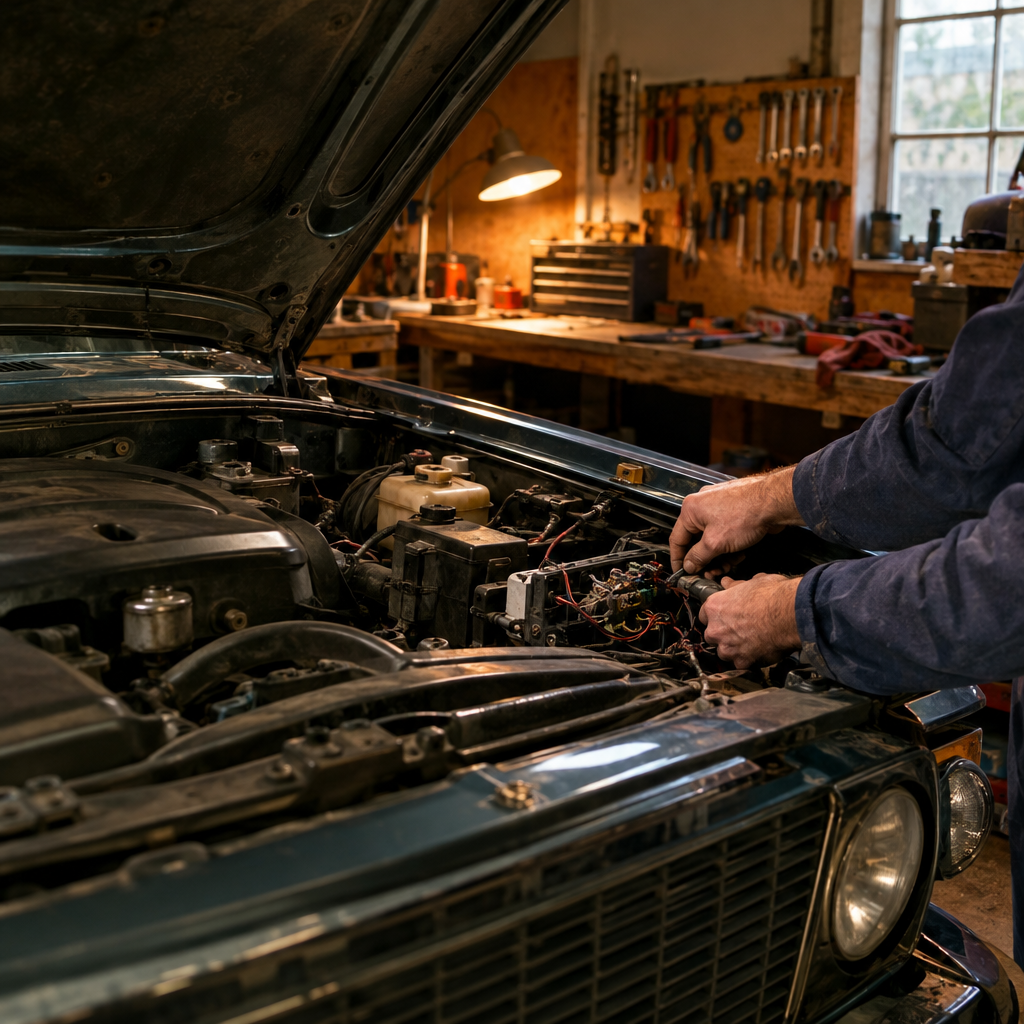
How To Handle Common Electrical Faults In Older Vehicles
As vehicles age, their electrical systems can become less reliable, leading to a range of common faults. For UK drivers, understanding these issues is crucial for maintaining roadworthiness, especially with the upcoming MOT test that checks for safety and emissions compliance. This guide will help you identify symptoms, conduct checks, and take action when faced with electrical faults in your older vehicle.
Common Electrical Faults
Older vehicles often suffer from specific electrical problems. Here are some of the most common issues you might encounter:
- Battery Problems: A weak or dead battery can cause starting issues.
- Corroded Connections: Corrosion on battery terminals can disrupt power flow.
- Faulty Alternator: An alternator that isn’t charging properly can lead to electrical failures.
- Blown Fuses: Fuses protect circuits, and a blown fuse can result in non-functional components.
- Wiring Issues: Frayed or damaged wires can lead to shorts or open circuits.
Identifying Symptoms
Recognising the symptoms of electrical faults can save you time and money. Here are some signs to look out for:
- Dim Lights: Dimming headlights or dashboard lights can indicate battery or alternator issues.
- Starting Difficulties: If your vehicle struggles to start or makes a clicking sound, the battery may be failing.
- Electrical Components Malfunctioning: If your radio, windows, or lights are not functioning correctly, it could be a sign of a blown fuse or wiring issue.
- Burning Smell: A burning smell can indicate overheated wires or components.
Conducting Basic Checks
Before booking a mechanic, you can perform a few simple checks to diagnose electrical issues:
1. Inspect the Battery
Start by checking the battery terminals for corrosion. If you see white or greenish powder, clean the terminals with a mixture of baking soda and water. Make sure the connections are tight.
2. Check the Fuses
Locate the fuse box (refer to your owner's handbook for its location). Check for any blown fuses, which are usually indicated by a broken wire inside the fuse. Replace any blown fuses with the same amperage rating.
3. Test the Alternator
With the engine running, use a multimeter to check the voltage at the battery terminals. A healthy alternator should produce between 13.7 and 14.7 volts. If the reading is below this, the alternator may need replacing.
4. Inspect Wiring
Look for any visible signs of wear or damage on the wiring harness. Pay special attention to areas that are exposed to heat or movement. If you spot any frayed wires, they may need to be repaired or replaced.
Seasonal Considerations
In the UK, seasonal changes can exacerbate electrical issues. Cold weather can weaken batteries, while damp conditions can lead to corrosion. Regular checks during these times are essential to prevent breakdowns.
When to Book a Mechanic
If you’ve conducted the above checks but still experience issues, it’s time to consult a professional. Here are scenarios where booking a mechanic is advisable:
- Persistent starting problems despite a new battery.
- Unexplained electrical issues that seem to be intermittent.
- Visible smoke or burning smells.
- Complex wiring issues that require specialist tools or expertise.
Consider that the cost of hiring a mechanic can vary widely, depending on the complexity of the issue and the garage's location. For example, basic diagnostics may start around £50, while more extensive repairs, such as alternator replacements, can range from £200 to £600. Always ask for a quote before proceeding with repairs.
Maintaining Your Vehicle’s Electrical System
Regular maintenance is key to prolonging the life of your vehicle's electrical system. Follow these tips:
- Regular Inspections: Schedule inspections during your regular service intervals, as recommended in your manufacturer’s service schedule.
- Battery Care: Keep the battery clean and check its charge regularly, especially before winter.
- Fuse Checks: Inspect and replace fuses as needed during routine checks.
- Professional Servicing: Consider having a professional service your vehicle at least once a year to catch potential issues early.
By being proactive about electrical maintenance, you can enhance the reliability of your older vehicle and ensure it remains roadworthy for years to come.
UK ownership context
Use your owner's handbook and service schedule as the starting point, then adapt the timing to UK stop-start traffic, colder months and the mileage your car actually covers.
For many drivers, the most useful benchmark is not a generic internet interval but the manufacturer schedule, recent MOT advisories and the pattern of local driving the vehicle sees each week.
Useful UK references
- DVSA and GOV.UK guidance on MOT preparation
- Check previous MOT advisories and failures
- Use the vehicle owner's handbook and manufacturer service schedule for model-specific intervals, fluids and warning-light guidance.